You Said You Weren't Going to Watch It. You Watched It.
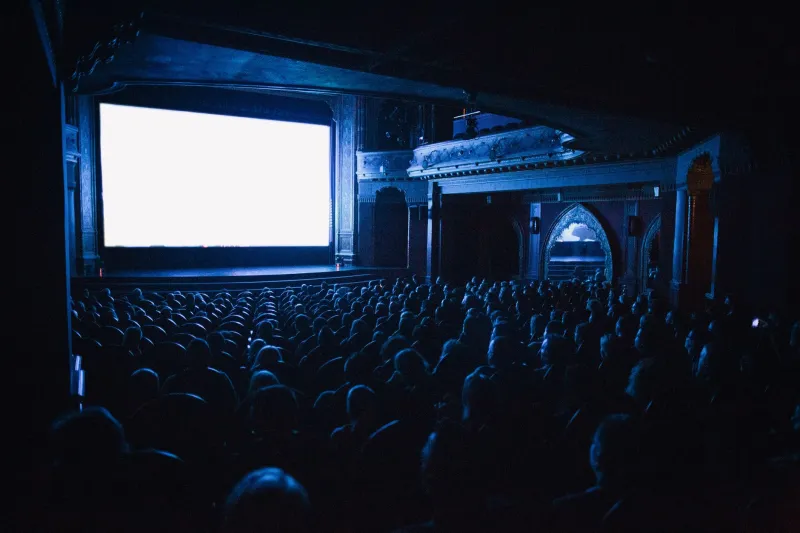
Sometime around the third trailer drop, the discourse always reaches the same temperature. Social media fills up with takes. Someone makes a side-by-side comparison showing exactly how the original did it better. A respected critic weighs in with a headline that's basically a polite way of saying "please don't." And then, opening weekend, the numbers come in — and it turns out a whole lot of people who were very publicly skeptical somehow found themselves in a theater seat anyway.
This is one of the more honest things entertainment does to us. It catches us in the act of being exactly who we are.
The Pre-Release Outrage Pipeline
There's a whole ritual now around sequels and reboots that nobody technically asked for. It starts with an announcement, usually dropped on a slow news day, and within hours the reactions have already hardened into camps. The defenders show up. The cynics show up louder. Someone digs up a quote from a director or producer that can be read two ways, and both sides read it the way they want to.
What's interesting is that this ritual has almost nothing to do with the actual film. It's a performance of preference — a way of signaling that you have taste, that you remember the original fondly enough to protect it, that you're not the kind of person who just mindlessly consumes whatever a studio throws at you.
And then the movie comes out, and you go see it, and you feel a little weird about that, and you don't post about it quite as loudly as you posted about the trailer.
The Completion Instinct Is Real and Studios Know It
Here's the thing that nobody really wants to admit: we are not watching out of excitement half the time. We're watching out of something closer to obligation.
If you spent a meaningful chunk of your adolescence with a particular franchise — if those characters showed up during a specific period of your life, if the story felt like it was partly yours — there's a psychological pull toward seeing it through that has very little to do with whether the new installment deserves your time. You're not evaluating the movie as a movie. You're trying to close a loop that the original opened inside you.
Studios have figured this out. They've gotten very good at packaging nostalgia as necessity. The marketing doesn't really try to convince you the new entry is great — it just reminds you that you already care about the universe, and that this is the next chapter, and that chapters are meant to be read in order. It's less of a pitch and more of a gentle nudge toward something you were probably going to do anyway.
What Critics Can and Can't Do Here
There's a persistent fantasy that if enough trusted voices come out against a film early, audiences will redirect their attention elsewhere. And sometimes that happens — critical consensus has real power, especially for mid-budget original films that need word-of-mouth to survive.
But for franchise entries with built-in audiences? The math is different. A 38% on Rotten Tomatoes doesn't necessarily stop a Transformers sequel from clearing $150 million domestically. It just means people go in with lowered expectations, which, counterintuitively, sometimes makes the experience more enjoyable. You're not hoping to be blown away. You're hoping to be adequately entertained by something familiar, and familiar almost always delivers on that specific, modest promise.
The critics aren't wrong. The audience isn't wrong either. They're just answering different questions.
The Enjoyment Problem Nobody Talks About
Here's where it gets a little uncomfortable: a lot of people walk out of sequels they watched despite themselves and feel... fine. Not inspired. Not moved. Not convinced the story needed to continue. Just fine.
And "fine" keeps the machine running.
If audiences walked out furious or bored to tears, the cultural feedback loop would eventually push studios to recalibrate. But "fine" doesn't generate that pressure. "Fine" is a three-star review you don't bother writing. "Fine" is telling your friend it was "pretty much what you'd expect" and leaving it there. The franchise continues. The next one gets greenlit. The announcement drops. The discourse starts again.
There's something a little melancholy about that cycle if you look at it directly. We're not being deceived, exactly. We're just consistently choosing the comfortable option over the honest one, and the industry is structured to make that choice as easy as possible.
When the Skeptics Were Right and It Didn't Matter
Some of the most telling case studies are the ones where the pre-release skepticism turned out to be completely justified — where the reviews landed exactly where the cynics predicted, where the film delivered precisely the hollow experience everyone feared — and it still made a lot of money.
That's the version of this story that deserves more attention. Not "we doubted it and it surprised us" (that's the redemption arc studios love to tout). The more revealing pattern is "we doubted it, it was exactly as bad as we feared, and we went anyway and contributed to the sequel getting made."
What does that say about the relationship between audiences and franchises? It says the relationship has moved past the point where quality is the primary driver of engagement. It's become something more like a subscription — you keep showing up because you're already invested, because the alternative is being the person who checked out, and checking out feels like a small loss even when staying in costs you two hours and fifteen dollars.
The Question Worth Sitting With
None of this is a condemnation of sequels, or of the people who watch them despite themselves. Franchises exist because people love them, and love is not always rational, and that's fine. Some of the most genuinely great films ever made are sequels. The format isn't the problem.
The question worth sitting with is a simpler one: when was the last time you watched something because you were actually excited about it, rather than because you felt like you owed it to a story you used to love?
There's a difference between those two experiences, and it's worth knowing which one you're in before you buy the ticket. Because studios are counting on you not to notice the distinction — and historically, they've been pretty right about that.